
Back Pain When Sitting All Day: How To Fix And Prevent It
Is back pain creeping in after sitting for too long?
For most of us, the problem isn’t that we’re sitting “wrong”, or that our workspace isn’t “ergonomic” enough.
It’s simply because we’re holding one position for a long time.
Have you noticed that whenever you sit up “straight”, you can hold that posture for like 5 minutes? Then it feels awkward and stiff.
This is because your brain doesn’t care about “good” or “bad” posture. It just wants to keep the blood flowing, and it can’t do that efficiently if you’re sitting like a statue for hours!
But, what can you actually do when your back is sore or even painful, but you still need to keep working?
I’ll show you 4 quick things you can do in the next 5 minutes to fix that!
As a physio who works from home, I do these frequently and my back has no pain.
These can help prevent back pain from sitting all day:
4 Things that will help your back TODAY
If you do nothing else, do at least 1 of these!
They’re low effort, realistic, and you can repeat them without turning your life upside down:
1) Make your setup comfortable, not perfect
A lot of ergonomic advice gets treated like rigid rules, when really they’re just guidelines.
The goal isn’t to match some perfect textbook setup.
It’s to adjust those guidelines so YOUR body, with YOUR unique anatomy, feels as comfortable as possible while you work.
The general guidelines are:
- Chair position: Sit all the way back in the chair, with your hips slightly higher than your knees if possible. If your lower back is acting up, avoid perching on the edge of the seat for too long.
- Lumbar support: Support the natural curve of your lower back. A small pillow or rolled towel works perfectly fine.
- Screen height: Keep your screen around eye level so you’re not constantly looking down or jutting your head forward. Books or a laptop stand can do the job. Personally, getting a second monitor made a huge difference for me, this is mine.
- Arm position. Keep your elbows supported on the desk and/or armrests when possible, and close to your body. The cue is relaxed shoulders. If your shoulders are creeping up toward your ears, something needs adjusting.
- Feet position. Keep your feet on the floor, dangling legs are a no-no as they can make your lower back feel more tense. I have a big chair so I’m constantly changing how I sit, but never dangling my legs.
Also, you can tweak your setup depending on the day!
For example, I move my keyboard and mouse around depending on how my shoulders feel that day.
Small adjustments make big differences, just try some things and check how you feel.
HDB TIP: Even a perfect ergonomic setup will start to feel bad if you stay in the same position for too long, change positions often!
2) Try these exercises to relieve lower back pain from sitting too much
Here are a few quick exercises I do whenever my back starts feeling stiff during the workday (even 30 to 90 seconds can help!):
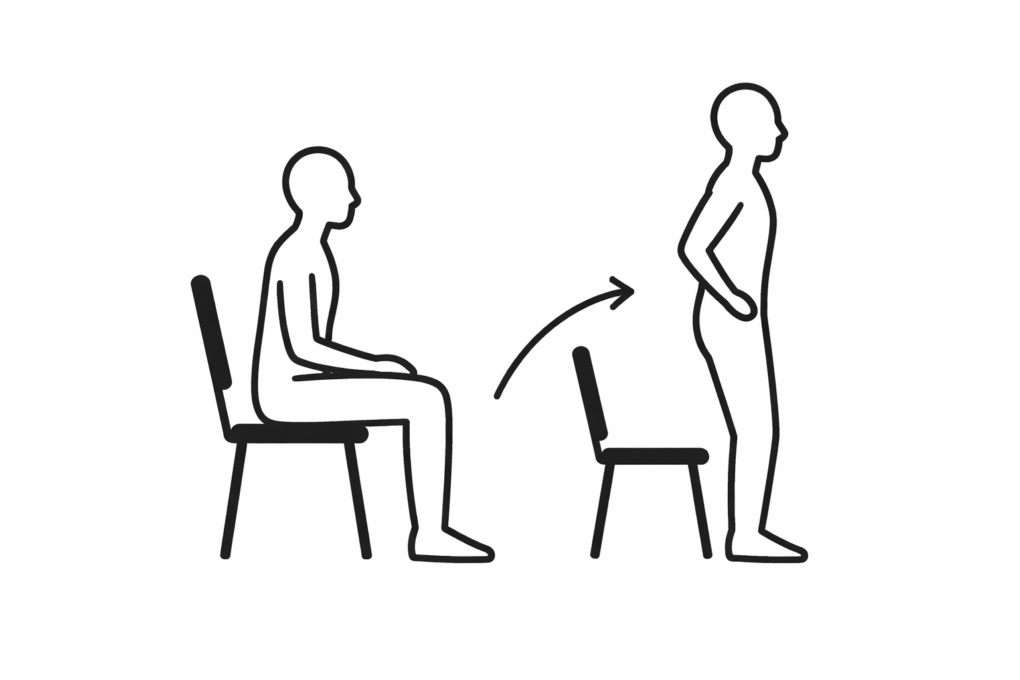
Sit-to-stand (chair squats)
Literally stand up and sit back down a few times.
For an extra kick, squeeze your glutes as you stand, and try to sit down with control instead of dropping into the chair.
If it feels okay, you can lightly touch the chair and stand right back up to keep the movement going.
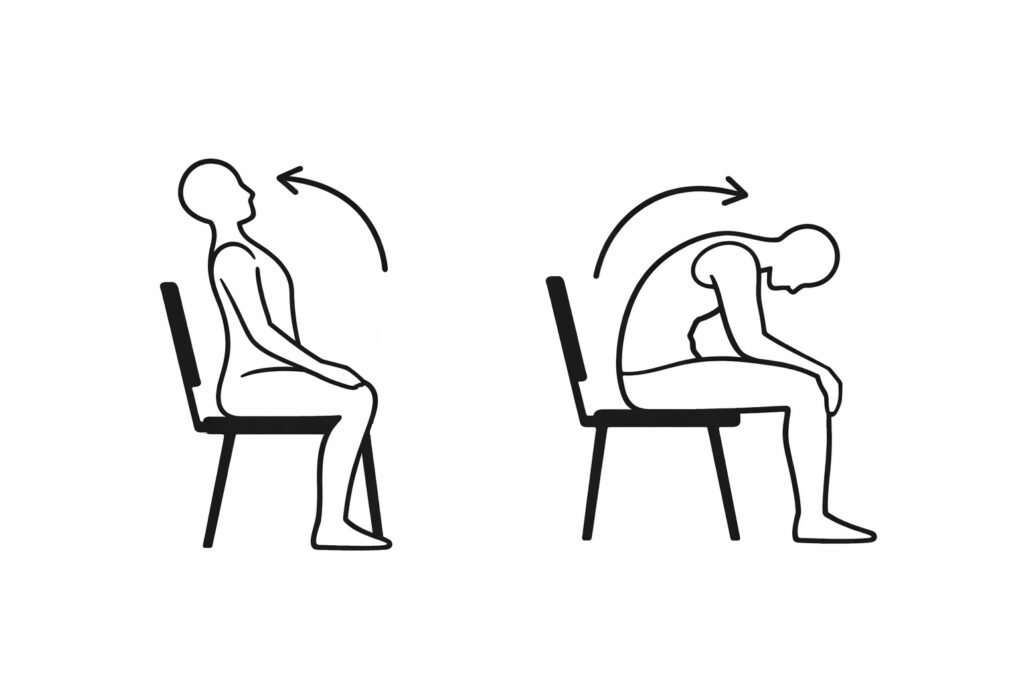
Seated cat-cow
Gently arch your back, then round it. You can use your arms to push the stretch a bit further.
You’re just moving your spine through a small range, it’s not a big movement. Nothing fancy, but it usually feels good pretty quickly.
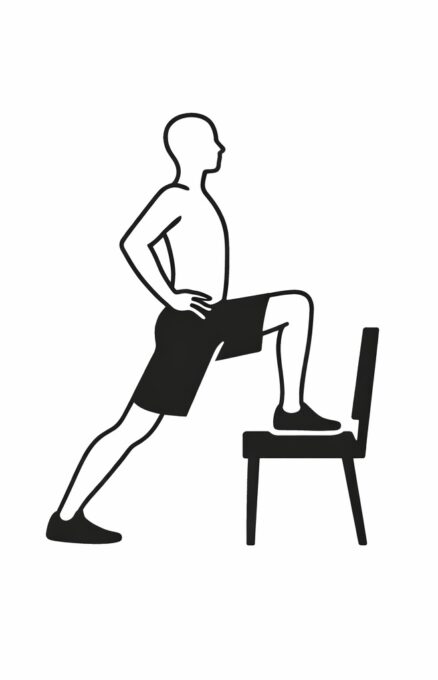
Hip flexor stretch
This can help counter some of the time spent sitting! Stand up, plant your feet on the chair and push your hips forward.
Squeeze the glute of the side you’re working on for a stronger stretch and more relief.
3) Rotate your setup (sit, stand, move)
If the main problem is staying in the same position for too long, the easiest fix is to switch things up throughout the day:
- Sit for a while
- Stand for a while
- Take a break when you start feeling stiff
The exact mix doesn’t matter that much. The main idea is just to give your body some movement variety.
If you want tools that make that easier, these are the ones I use:
- Standing desk for switching between sitting and standing, a game-changer. This is the one I recommend.
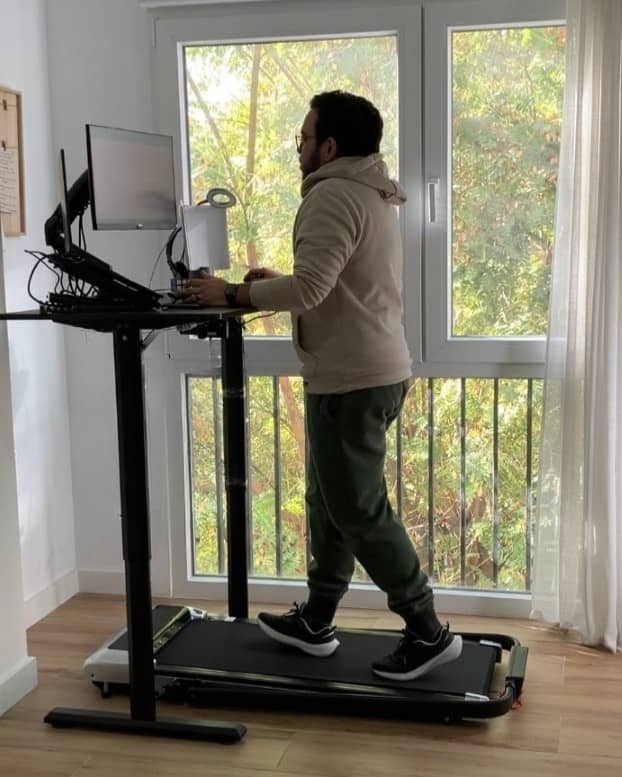
- Walking pad for adding more movement into the day. You need a standing desk first, though. This is my walking pad, love it!
None of these are required, but they make it easier to change positions and move more without having to think about it as much.
4) Try to move more throughout the day
Back pain from sitting all day is mostly driven by sensitivity, not damage per se. What happens is:
- The same back tissues get loaded over and over
- Nothing else gets a turn to share that load
- It increases sensitivity in that area, leading to stiffness, pain, etc
This is why most people feel much better after doing the exercises above, it’s reducing sensitivity and redistributing load.
And this is also why stretching doesn’t always work.
It helps reduce the sensation of stiffness, but it’s not redistributing the load of the tissues in the first place, so the muscles get stiff again.
Walking a bit every day is the easiest fix. Anywhere from 7,000 to 10,000 steps per day is good.
But the optimal thing to do is strength training.
By making your muscles stronger, they’re also able to handle the same loads with less effort, leading to less sensitivity!
What I do as a physio who works from home
I’ll be honest, I don’t sit with a “perfect posture”.
I’ve never been able to find real comfort with it. Plus, I’m very fidgety so I couldn’t keep it if I tried (undiagnosed ADHD I guess?).
I still catch myself leaning into my screen like a gremlin when I’m focused. And I definitely don’t get up every 30-60 minutes like we all should.
What I do instead is make things easier on myself so I move without having to think about it too much.
Here’s what that looks like in real life:
Set up my desk so movement is the easy option
I’m a couch potato at heart, so if I had to stop work and roll out a mat every time I felt stiff, I honestly would rather stay a fossil.
So I got a standing desk. It makes it SO easy to switch positions a few times a day, I just push a button and that’s it.
I also have a walking pad. A couple of times per week, I try to slide it under my standing desk so I can walk a bit while I work.
And back when I couldn’t afford either of those things,I’d take a break and walk a bit around the house.
Use movement as a reset, not a task
When my back starts feeling stiff, I don’t go “okay time for my exercise routine.”
I just stand up, move a bit, maybe do a couple of sit-to-stands or a quick stretch while, then get back to work. It takes a minute or two and that’s usually enough.
Change positions a lot
I’ll sit, then stand, then sit again. Sometimes I’m sitting “properly”, then half-crossed on the chair.
I get into whatever posture feels good in the moment, regardless of how “bad” it looks from the outside. What matters is that it feels good to ME.
Exercise as consistently as possible
Right now I’m going to the gym x3 times a week and I REALLY feel the difference. When I sit for work, it takes much longer to start feeling stiff compared to before.
I also do yoga once a week and walk a bit every day. I aim for 7,000 steps per day but rarely get there if I’m honest.
Back when I didn’t go to the gym or do yoga, I’d just try to walk a bit every day. That alone makes a massive difference!
Don’t chase perfect consistency
This has honestly been the hardest part for me.
Some days I move a lot. Some days I barely move at all.
On the days I barely move, I usually feel guilty about it. I know it would probably help, but I just can’t bring myself to do it.
So I’ve been trying to get better at accepting those days and reminding myself that tomorrow is another day.
If I end up glued to the sofa for the whole day, I try to let that be okay and see how I feel tomorrow. I usually feel better the next day and more willing to move again.
Giving myself permission to just breathe, eat, and do nothing else sometimes is actually what helps me stay consistent in the long run.
Why your back hurts when you sit all day
A lot of people think back pain from sitting means they have bad posture, a weak core, or some hidden damage in their spine.
Usually, it’s way less dramatic than that.
When you stay in the same position for too long, there are a few things happening in the background and end up causing stiffness or even pain:
Muscles stay “on” in the same way for too long
Imagine holding a glass of water for 1 hour.
Your wrist, elbow, and shoulders will probably feel stiff after 5-10 minutes. The whole thing will be unbearable by the 30-minute mark.
And it’s not because the glass is heavy, but because you’ve kept the same position for too long.
The exact same happens when we’re sitting for long periods! This builds up local fatigue and tension in the muscles that keep you upright.
The nervous system turns the volume up
Your brain is constantly getting input from your body, so when nothing changes for a long time:
- The signal from that area becomes repetitive
- Your brain starts paying more attention to it
- Sensitivity increases as your brain tries to figure out why the signal doesn’t stop
So the same position that felt fine 20 minutes ago now feels uncomfortable or even painful.
Not because damage suddenly appeared, but because your nervous system is more sensitive to that input.
That’s why it feels sooo much better after you move a bit!
Blood flow isn’t as efficient
Movement helps pump blood around your body, but when you’re still:
- Muscles aren’t pumping blood as usual, so circulation is slower in certain areas
- Tissues don’t get as much oxygen, which they need to work properly
- Waste products hang around longer
Have you ever felt a dullness on the upper back after sitting for a long time? It usually comes with an urge to move the neck.
That’s because of inefficient blood flow to the area! That urge to move is your body trying to bring oxygen to those tissues and remove the waste products that accumulated.
Joints stop getting movement-based “nutrition”
The joints don’t have a great blood supply in general.
They rely on movement to circulate fluid (called synovial fluid) that keeps them lubricated and healthy.
When you move:
- Fluid gets pushed in and out
- Nutrients get delivered
- Waste products get cleared
But when you stay still, that process slows down. So joints start to feel stiff, giving you the urge to move them!
So as you can see, stiffness or even pain does not automatically mean damage.
Most of the time, it’s your body saying, “Hey, I’m getting annoyed. Change something.”
That’s why movement helps so much.
Not because it magically fixes your posture or “realigns” anything, but because it changes the load, gets things moving again, and gives your back a break from the exact thing that’s been bothering it.
Overlooked back pain triggers
Does your back feel more painful or stiff during a stressful week, after a few bad nights of sleep, or when your anxiety is through the roof?
You’re not imagining things. It’s a very normal pain response.
Your body is usually a lot less tolerant when you are tense, underslept, and mentally running on fumes.
For example, when you are stressed, your body tends to stay more tense, your nervous system becomes more reactive, and small discomforts are easier to notice.
Anxiety also increases muscle tension, threat perception, and pain sensitivity.
Poor sleep is a big one, too. If you’re not getting good quality sleep, your body generally handles pain worse. It also increases the risk of pain sticking around longer than usual.
And weirdly enough, even dehydration can increase pain sensitivity!
These are some reasons why back pain can feel weirdly inconsistent.
You can sit for the same number of hours on 2 different days and feel completely different. One day you are fine, the next day your back is filing complaints by lunch.
Sleep, stress, and anxiety are happening in the background, so they can turn the volume up even when your routine is the same.
When back pain might need more attention
Most desk-related back pain improves when you start moving more. As long as it gets better over time, you’re good to go.
However, if these things are happening, best get it checked:
- The pain is getting progressively worse
- You have numbness, tingling, or weakness, especially in the legs
- The pain is waking you up at night or you have pain at rest that does not ease
- You have other signs like fever, unexplained weight loss, or bowel/bladder changes
- It’s not improving at all after a couple of weeks, even after making some obvious changes
Please get checked by a professional if you’re unsure!
Get these to prevent back pain while sitting
There are a few things I use or recommend because they make it wayyy easier to move more, change positions, and stay comfortable throughout the day:
- Standing desk: One of my fave tools, it’s so easy to switch positions during the day with it. This is the one I recommend.
- Walking pad: Perfect to add more movement into your workday. No need to walk fast or turn it into cardio, a slow walk is more than enough! This is mine, I’m obsessed.
- Gaming chair: Gamers sit for LONG periods of time, so these chairs are perfect for work. Keep it simple, you don’t need a spaceship! This is mine and I love it.
- Under-desk bike or elliptical: Perfect if you can’t get a standing desk but still want to increase movement. Here’s how to pick the best one for you.